ByJohn A
Single Implants, Bridges, or Full-Arch Teeth? Choosing Your Best Fit
Implant Dentistry Options for One Missing Tooth or an Entire Smile
Replacing missing teeth involves more than filling a visible gap. The right treatment depends on how many teeth are missing, their location, the health of neighboring teeth, available jawbone support, and the level of daily maintenance you prefer. A single dental implant generally suits one missing tooth, an implant-supported bridge can replace several adjacent teeth, implant-retained dentures offer removable teeth with added stability, and full-arch dental implants can restore an entire upper or lower row of teeth. For patients considering implant dentistry Tysons VA, understanding these differences makes it easier to discuss a treatment plan that supports chewing, appearance, and long-term oral health. G4 Dental Implants helps patients consider restorative options based on their individual dental needs and goals.
Single Tooth Dental Implant: A Focused Solution for One Missing Tooth
A single tooth dental implant replaces one missing tooth with an implant placed in the jawbone, an abutment that connects the components, and a custom crown that serves as the visible tooth. The implant acts as an artificial root, helping support the crown independently of neighboring teeth.
This option is often appropriate when one tooth is missing and the adjacent teeth are healthy. Unlike a traditional dental bridge, a single implant usually does not require reshaping neighboring teeth to support a restoration. It also transfers chewing forces to the jawbone through the implant, helping maintain function in the area.
Bone volume and gum health influence eligibility. Patients with insufficient bone may need a bone graft or another preparatory procedure before implant placement. Active gum disease, uncontrolled medical conditions, and tobacco use can also affect healing and implant success, so a thorough examination is necessary.
A single implant requires regular brushing, flossing or suitable interdental cleaning, and professional maintenance. The crown may eventually need repair or replacement because it experiences daily chewing forces, even when the implant itself remains stable.
See also: Can Artificial Intelligence Be Trusted?
Implant-Supported Dental Bridge for Several Missing Teeth
An implant-supported dental bridge replaces multiple missing teeth by attaching a connected series of artificial teeth to dental implants. Instead of placing an implant for every missing tooth, the dentist determines how many implants are needed to support the bridge safely, based on the span, bite forces, bone support, and restoration design.
This option often suits patients missing several adjacent teeth. It can restore a continuous section of the dental arch without relying on natural teeth at either end of the gap for support. Preserving healthy neighboring teeth is a major advantage compared with a conventional tooth-supported bridge, which generally requires preparing supporting teeth.
The position of the missing teeth matters. A short gap in an area with adequate bone may be suitable for a relatively straightforward bridge, while a longer span or a region exposed to heavy chewing forces may require a different implant arrangement. The dentist must also assess the opposing teeth, bite alignment, gum condition, and space available for cleaning beneath the bridge.
Maintenance requires careful cleaning around the implants and under the connected teeth. Special floss threaders, interdental brushes, or a water flosser may help remove trapped food and plaque. Because the teeth are connected, a problem affecting one part of the restoration may require repair of a larger section rather than an isolated crown.
Implant-Retained Dentures for Greater Stability
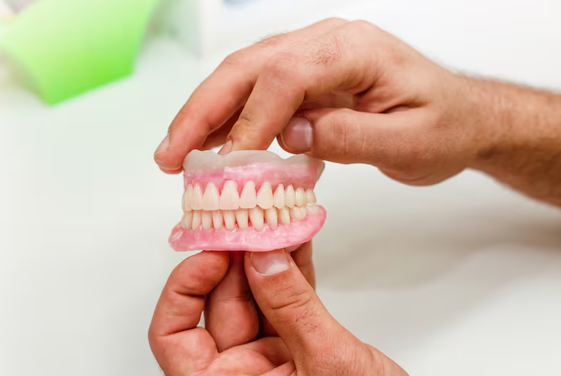
Traditional removable dentures rest primarily on the gums and may shift during speaking or chewing. Implant-supported dentures, including implant-retained designs, use dental implants to improve stability and retention. The exact arrangement depends on the type of attachment system and how the denture is supported.
An implant-retained overdenture commonly clips onto attachments connected to implants and can be removed by the patient for cleaning. This design can reduce movement and improve confidence compared with a conventional denture. Some designs rely on the gums for part of their support, while other implant-supported dentures transfer more chewing forces directly through the implants.
This option can be useful for patients missing many teeth who prefer a removable restoration. It may also suit people who want improved denture retention but are not candidates for, or do not prefer, a permanently fixed full-arch prosthesis.
The main maintenance consideration is that removable dentures need daily cleaning outside the mouth, along with cleaning around the implant attachments. Retention components can wear and may need servicing or replacement. Changes in gum and bone contours can also affect denture fit over time, so periodic professional adjustments remain necessary.
Full-Arch Dental Implants for an Entire Upper or Lower Row
Full-arch dental implants replace all or nearly all teeth in one dental arch using a carefully planned set of implants that support a full-arch prosthesis. The restoration may be fixed in place and removable only by a dental professional, or designed as a removable overdenture, depending on the treatment plan.
A fixed full-arch restoration can be appropriate for patients who have lost most teeth in an arch or whose remaining teeth have a poor long-term prognosis. It provides a connected set of replacement teeth without requiring an individual implant for every tooth. Implant positions, bone anatomy, bite forces, and the desired appearance determine the final design.
Patients need an assessment of their remaining teeth, gum health, jawbone volume, and general health before treatment. Advanced tooth loss may involve substantial bone resorption, which can influence implant placement and the type of prosthesis that can be supported. Some patients need preparatory procedures, while others may qualify for a plan that uses available bone without extensive grafting.
A fixed full-arch restoration stays in the mouth during daily cleaning, so patients must learn to clean around and beneath it thoroughly. Professional examinations are essential because plaque can collect around implants, and the prosthetic teeth or framework may require maintenance. Chipping, screw loosening, attachment issues, or wear can occur and should be addressed promptly.
G4 Dental Implants can be part of the conversation for patients comparing full-arch restoration designs, particularly when the goal is to replace an entire row of teeth with a coordinated treatment plan.
Dental Bridge vs Implant: What Changes the Decision?
A traditional dental bridge and a single implant can both replace one missing tooth, but they differ in how they are supported. A conventional bridge uses neighboring teeth as anchors, while a single implant supports its own crown within the jawbone. Implant-supported bridges use implants rather than natural teeth to carry the restoration.
The condition of neighboring teeth is a major consideration. If the teeth beside a gap are healthy, an implant may preserve their natural structure. If those teeth already have large restorations or require crowns, a conventional bridge may be worth discussing. However, their long-term prognosis must be considered before using them as bridge supports.
The number and position of missing teeth also influence the decision. One isolated gap may suit a single implant, while several adjacent missing teeth may be better served by an implant-supported bridge. Missing teeth spread across an arch can require a different arrangement, especially when chewing forces and the condition of the remaining teeth vary from one area to another.
Bone support can change the plan as well. Dental implants need adequate bone for stable placement, and some patients require grafting. A traditional bridge does not require an implant site, although the supporting teeth and gums must still be healthy enough to carry the restoration.
Fixed vs Removable Implant Teeth: Daily Care and Repair
The distinction between fixed vs removable implant teeth affects daily routines, professional maintenance, and the way future repairs are handled. Fixed restorations remain in place during home care, while removable options can be taken out for cleaning.
A fixed implant crown or bridge can feel similar to natural teeth during normal use, although it still requires specific cleaning around the implant margins. Fixed full-arch teeth may provide a stable chewing surface, but cleaning underneath the prosthesis can require specialized brushes or oral irrigation devices. The restoration generally needs to be removed by a dental professional for certain repairs or maintenance.
Removable implant-retained dentures allow direct access to the gums, denture surfaces, and attachment components. Patients can clean the prosthesis outside the mouth and may find this arrangement easier to manage. However, attachments can loosen or wear, and the denture may need relining or adjustment as the mouth changes.
Neither design eliminates the need for follow-up care. Implant health depends on controlling plaque, maintaining healthy gums, monitoring bone levels when indicated, and correcting bite problems before they cause further damage. The most suitable design is one the patient can maintain consistently and that the dental team can service if complications arise.
Multiple Missing Teeth Replacement Requires Careful Planning
Planning multiple missing teeth replacement begins with a complete assessment rather than counting the gaps alone. The dentist evaluates the position of each missing tooth, the health of the remaining teeth, the bite, jawbone anatomy, gum condition, and the patient’s cleaning ability.
Imaging helps assess bone dimensions and identify anatomical structures that influence implant placement. A clinical examination also helps determine if any remaining teeth can be preserved or if they have a poor prognosis. Removing a tooth that could have been maintained is not always necessary, so treatment planning should consider the long-term value of existing teeth.
The treatment process typically includes consultation and diagnostic assessment, any necessary preparation, implant placement, healing and evaluation of implant stability, and delivery of the final restoration. Some patients may qualify for a temporary restoration during treatment, but immediate loading is not appropriate for every case. The sequence depends on bone quality, implant stability, grafting needs, and the planned prosthesis.
Patients should also understand the likely maintenance requirements before choosing a design. A restoration that looks attractive but is difficult to clean may create problems over time. Discussing hygiene tools, follow-up visits, repair procedures, and the expected service needs of the prosthesis helps set realistic expectations.
Choosing the Right Dental Implant Restoration Options
The best dental implant restoration options depend on clinical findings and personal priorities. A single implant may be the most conservative implant-based choice for one isolated gap. An implant-supported bridge may replace several neighboring teeth with fewer implants than individual replacements would require. Implant-retained dentures can improve retention while remaining removable, and fixed full-arch restorations can replace an entire row of teeth for suitable candidates.
A dentist can compare these approaches by looking at six practical factors: the number and location of missing teeth, the condition of neighboring teeth, available bone support, daily cleaning needs, the stages of treatment, and the likely repair requirements over the years. No restoration is maintenance-free, and implant treatment does not prevent gum disease or guarantee that every component will last indefinitely.
The right plan should also account for comfort, appearance, chewing function, medical history, and the patient’s ability to maintain the restoration. Asking how the proposed teeth will be cleaned, what parts may need servicing, and how future repairs would be managed can make the decision more informed.
Restore Your Smile With a Plan Built Around Your Needs
Replacing missing teeth is a long-term decision that deserves careful evaluation. A single implant, implant-supported bridge, removable implant denture, or fixed full-arch restoration can each serve a different purpose, depending on the condition of the mouth and the goals of treatment. Choosing the appropriate option begins with understanding the available bone, protecting healthy teeth where possible, and selecting a restoration that supports comfortable chewing and manageable daily care.
Patients considering implant dentistry can schedule a consultation with a qualified dental professional to review their oral health, imaging findings, and restorative choices. A personalized discussion can clarify which treatment approaches are clinically appropriate, what preparation may be needed, and how the finished restoration will be maintained. With a well-planned approach and consistent professional care, dental implants can provide a durable foundation for restoring function, appearance, and confidence.